
Temporary Protection in Czechia
What legislative conditions has the Czech Republic put in place for beneficiaries of Temporary protection fleeing war-affected Ukraine? How do we compare to our neighbors? And where are the gaps? We have prepared a clear and accessible section featuring key information on one of our core topics—Temporary Protection. The page reflects the legislative framework as of February 2026.
N. of people fleeing from ukraine
And other relevant data
As of 2026, foreigners make up approximately 10% of the population in the Czech Republic, a country with around 11 million inhabitants. Until relatively recently—up to 1989—the country had a largely homogeneous population. After the opening of its borders, the number of foreign nationals began to grow gradually but steadily. A significant increase occurred following the arrival of nearly 400,000 individuals fleeing from Ukraine, who, as of 2025, are beneficiaries of Temporary Protection.
Source: Eurostat, 2025
Compared to other former Eastern Bloc countries that are now EU members, the Czech Republic has long had the highest proportion of foreigners in its population – last year, foreigners made up to tenth of the Czech population for the first time. Ukrainians have been the largest group of foreign nationals in the Czech Republic for over two decades. Many of them remain in the country—first acquiring long-term residence, and later permanent residency.
Since 2014, when legislation allowing dual citizenship was adopted, Ukrainian nationals have also constituted the largest group of foreigners granted Czech citizenship. Ukrainians are furthermore officially recognized as a national minority under Czech law.
Both recent and previously-settled arrivals from Ukraine constitute a significant part of the Czech Republic’s workforce, with many employed in the construction sector and in low-skilled occupations.
Ukrainian citizens in Czechia employed as manual laborers (ISPV, 2023)
the timeline…
State of emergency
The Czech Republic legally responded to the arrival of persons fleeing from Ukraine by declaring a state of emergency, which lasted four months (from early March to the end of June 2022). The government extended this state twice. The declaration of a state of emergency theoretically allows for the restriction of property rights, freedom of movement and residence, freedom of enterprise, and the imposition of work obligations. Therefore, it was adopted as a short-term measure, which the government consistently communicated as not targeting the settled population of the Czech Republic. Given previous negative experiences from the COVID-19 pandemic, this approach was better accepted.
Crisis planning and coordination
Crisis scenarios in the Czech Republic anticipated the possibility of a large-scale migration wave. However, specific operational plans on how to manage the arrival of such a large number of people in such a short time were not prepared. Despite these limitations, the Czech Republic responded relatively effectively and professionally both legally and practically, ensuring necessary assistance to all arrivals.
In April 2022, a Strategic Group for the Coordination of the Refugee Crisis was established as an advisory body to the government, bringing together relevant actors in crisis management. After one year of operation (in February 2023), it was transformed into the Strategic Committee for the Coordination of Adaptation and Integration of Refugees from Ukraine. During its first year, the group was led by the Minister of the Interior; subsequently, coordination was transferred to the Government Commissioner for Human Rights.
legal framework
Regarding the specific legal regulation of the status of incoming persons, prior to the formal establishment of the possibility to grant temporary protection, the Czech Republic applied ad hoc measures. These were issued in the form of government resolutions and were valid only for the duration of the state of emergency.
After the state of emergency ended, the measures intended to remain in effect were converted into statutory form. The legal framework for persons under temporary protection was created already during the state of emergency by the adoption of three laws, the so-called “Leges Ukrainae.” These ad hoc laws were tailor-made for the given crisis and were repeatedly amended in the following months and years. The gradual legislative changes aimed to strengthen the self-sufficiency of new arrivals and reduce their dependence on state support.
Initially, the law referred primarily to “adaptation,” later to “adaptation and integration,” reflecting the temporary nature of the protection and Ukraine’s effort to prevent permanent integration abroad.
February 24 2022
Beginning of invasion to Ukraine
March 32022
Temporary protection activation by EU Council
March 4 2022
State of Emergency proclamati-
on
March 212022
Lex Ukraine I – Acts n. 65/2022 Sb. (TP, acom-
modation, 66/2022 Sb.(employ-ment) and 67/2022 Sb. (education)
June 27 and 302022
Lex Ukraine II and III (More grounds for inadmissi-
bility, Govt. regulation n. 206/2022 Sb. – acom-
modation changes)
January 242023
Lex Ukraine IV (first one-year extension)
April 12023
Lex Ukraine V (changes in social benefits and accom-
modation)
January 12024
Lex Ukraine VI (second one-year extension)
February 112025
Lex Ukraine VII (extension connected to European legislation, Special long-term residence, no citizenship for Russian nationals)
individual parts of the Lex Ukraine legislation
Temporary protection
Act n. 65/2022 Sb.
The Lex Ukraine – Temporary Protection was adopted concerning the status of temporary protection and serves as a lex specialis to the original law transposing the EU Temporary Protection Directive. This law provides a narrower personal scope (ratione personae) of temporary protection.
Problems gradually arose mainly related to the inadmissibility of an application for temporary protection if the applicant has already applied for or obtained protection in another state, which is not in accordance with the Temporary Protection Directive. Issues also included the exclusion of judicial review of inadmissibility decisions and the possibility of delivering decisions without written document. Extensive domestic case law developed, and a preliminary ruling request was submitted to the Court of Justice of the EU. The ruling in the Krasiliva case has already been issued, but in the first half of 2026, the state still did not comply with the court’s instructions.
For primarily political reasons, the Czech government refused to introduce a general legal framework allowing the transition from temporary protection to other residence titles. The main reason was that Ukraine wants its citizens back to have enough manpower to rebuild the country. The only option introduced by the Czech Republic is a highly exclusive type of long-term residence (“special long-term residence“), available only to persons with above-average income. However, this residence type does not correspond to the structure and needs of temporary protection holders – a large portion consisted of women with small children who did not meet the income requirements and therefore did not qualify for this residence status. In a first wave, the special long-term residence was granted to 13738 applicants.
In the initial phase, Lex Ukraine – Temporary Protection provided a generous public health insurance. Practically everyone who arrived after 25 February 2022 and met the conditions was included in the public insurance system. This support has gradually been reduced, and the period during which the state covers public health insurance payments has been shortened.
Employment
Act n. 66/2022 Sb.
Another law, Lex Ukraine – Employment, regulated access to the labor market and the drawing of social benefits. It allowed entry into the labor market without further restrictions and introduced new benefits: a humanitarian allowance and a solidarity household contribution.
However, for many new arrivals, it was difficult to find employment corresponding to their needs; there was a lack of, and sometimes reluctance to introduce, part-time jobs that would suit mothers with small children who needed to balance work and childcare. The jobs offered were often low-paid, and the rent levels exceeded the financial capabilities of families.
The state also did not establish an effective system of language courses, which significantly slowed down adaptation, integration, and the acquisition of adequate employment. Ongoing amendments to the laws also led to reductions in financial assistance and tightening of the conditions for its receipt.
Education
act n. 67/2022 Sb.
The Lex Ukraine – Education law addressed compulsory school attendance and continuing education, which became a particularly relevant issue given the large number of incoming children.
In the first months, Ukrainian children were partially integrated into Czech schools, while others attended separate Ukrainian classes. Often, they were taught in Czech in the mornings and continued with online lessons from Ukraine in the afternoons. A significant problem was the prolonged uncertainty about how many children were actually being educated, how many were studying online from Ukraine, and how many were not being educated at all. A legislative change allowing separate enrolment in primary schools for children of temporary protection holders was also viewed critically. This practice was assessed as unconstitutional in December 2025 and the legal framework allowing dual enrolment was annulled by the Constitutional Court.
The state gradually introduced a registration requirement for extending temporary protection by March 31 of each year. This allowed the state to obtain data on the number of recipients and school-age children and to better plan necessary services (although this was not always successful in practice).
Solidarity in czech society
An unexpectedly strong wave of solidarity emerged from Czech society. Individual involvement was voluntary; however, public participation was massive, both through volunteer activities and short-term employment contracts. Non-governmental organizations were very active and, after some initial hesitation, the state involved them in committees and processes.
A large number of people offered thousands of free accommodations, including places where the hosts themselves lived. Material assistance was provided on a large scale by both the state and individuals, with many people transporting refugees from the borders at their own expense. The reasons for this solidarity were shaped by the historical experience of 1968, although humanitarian motives also played a role. Numerous collections continue to be organized, including those focused on military aid to Ukraine.
Through non-profit organizations, material and financial aid worth approximately CZK 9 billion was delivered by the first months of 2026 (excluding state aid).
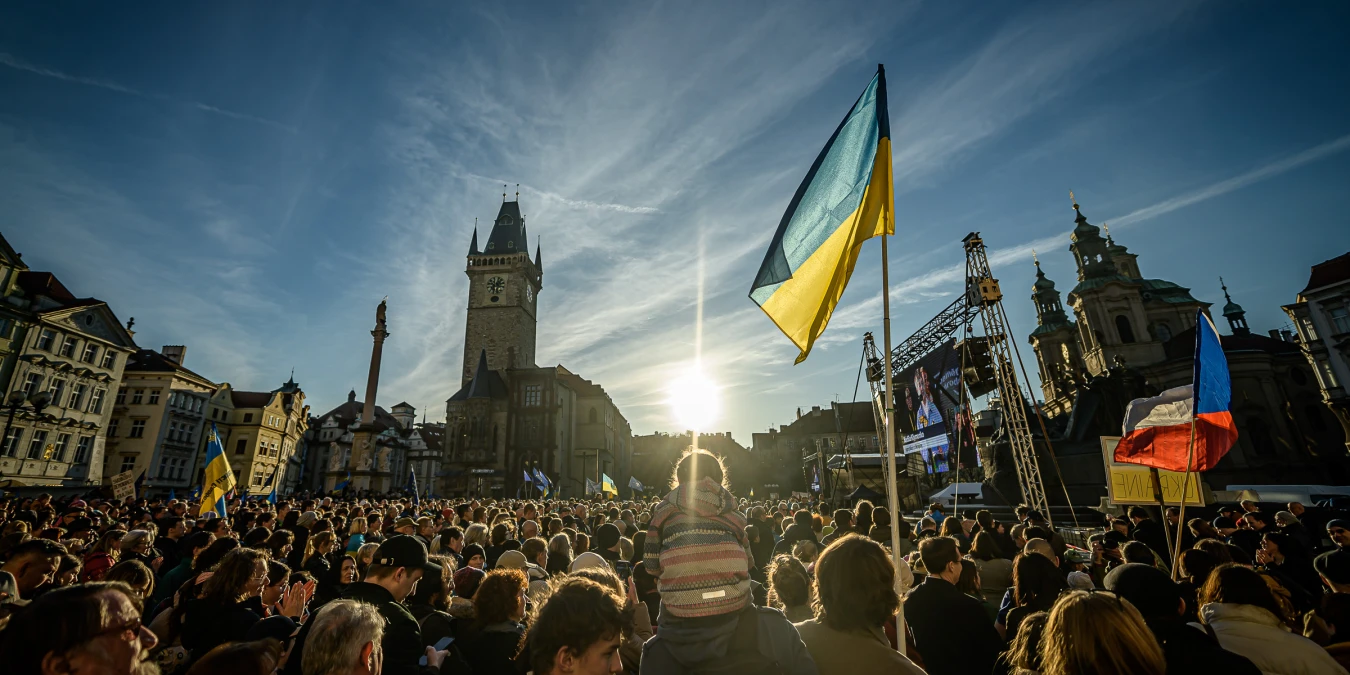
Demonstration of support to Ukraine (Source: Člověk v tísni)
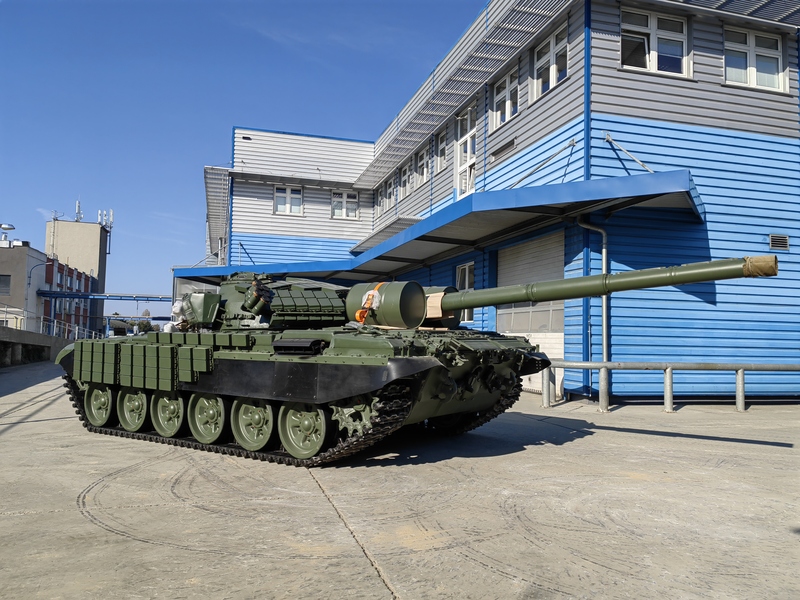
Thomas the Tank bought from small-donor fundraiser (source: Dárek pro Putina)
Forms of anti-Ukrainian prejudice incidents (2022–2025)
Source: In Iustitia, 2025
Over time, difficulties began to emerge regarding attitudes from the majority society. Attacks on persons from Ukraine started to occur, including verbal assaults, intimidation or threats, vandalism, as well as physical violence (which accounted for 41% of anti-Ukrainian incidents).
Anti-Ukrainian incidents have increased sixfold compared to the period before the invasion and are now among the most frequent types of hate crimes in the country. The organization In Iustitia (the only specialized NGO) speaks of insufficient protection from state institutions, a low willingness of the police to address these cases, a lack of legal assistance, and fear of dealing with such situations through official authorities.
supplementary sources
Do you want to find out more?
Read about the results of the joint project by academics from the Visegrád Group countries, Shelter law-making: Legal response to the massive migration caused by Russian aggression against Ukraine. The project was represented at the Centre by its Head, Věra Honusková.
© CeMiReLa, 2026